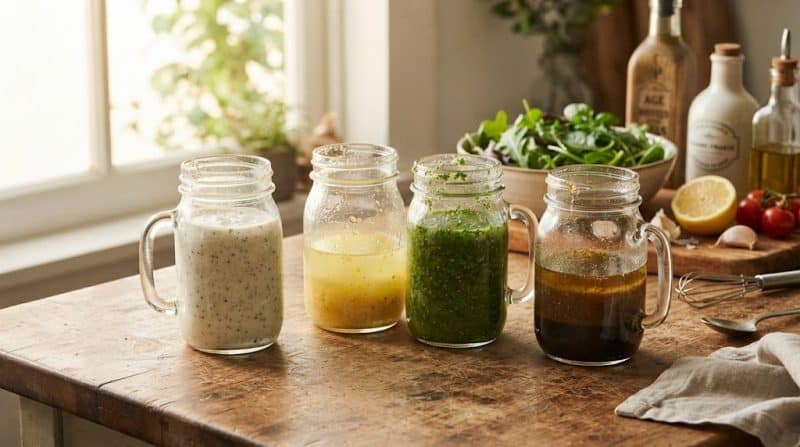
Fresh salads deserve fresh dressings. While store-bought bottles offer convenience, many contain added sugars, preservatives, artificial flavors, and unnecessary sodium that can overshadow the natural goodness of your vegetables. Making your own salad dressing at home is surprisingly simple, costs less, and allows you to control every ingredient that goes into your meal.
Whether you enjoy crisp garden salads, grain bowls, roasted vegetables, or grilled chicken, a homemade dressing can transform ordinary ingredients into something truly delicious. Most recipes require only a handful of pantry staples and take less than five minutes to prepare.
In this guide, you’ll discover 10 healthier homemade salad dressings that are flavorful, versatile, and easy enough for beginners. From light vinaigrettes to creamy yogurt-based options, these recipes prove that healthy eating never has to be boring.
Why Homemade Salad Dressings Are Healthier
Preparing your own dressing offers several advantages over commercial alternatives.
Better Ingredient Control
Homemade dressings allow you to choose:
- Extra virgin olive oil instead of refined oils
- Fresh herbs instead of artificial flavorings
- Natural sweeteners in moderation
- Sea salt according to your preference
- No preservatives or stabilizers
More Nutrients
Fresh ingredients like lemon juice, garlic, herbs, yogurt, and olive oil contribute vitamins, antioxidants, and healthy fats that support a balanced diet.
Lower Sugar and Sodium
Many bottled dressings contain surprising amounts of added sugar and salt. Homemade recipes let you reduce both without sacrificing flavor.
Budget-Friendly
A few pantry staples can produce multiple dressings for the price of a single premium bottled version.
Essential Ingredients for Homemade Dressings
Keeping these ingredients stocked makes it easy to prepare fresh dressings anytime.
| Ingredient | Purpose |
|---|---|
| Extra virgin olive oil | Healthy fat and smooth texture |
| Fresh lemons | Bright acidity |
| Apple cider vinegar | Tangy flavor |
| Balsamic vinegar | Sweet, rich depth |
| Dijon mustard | Helps emulsify dressings |
| Plain Greek yogurt | Creamy, protein-rich base |
| Tahini | Nutty creaminess |
| Garlic | Bold flavor |
| Fresh herbs | Freshness and aroma |
| Honey or maple syrup | Natural sweetness when needed |
| Salt and pepper | Balanced seasoning |
1. Classic Lemon Vinaigrette
This refreshing dressing pairs beautifully with leafy greens, grilled vegetables, seafood, and quinoa salads.
Ingredients
- ¼ cup extra virgin olive oil
- 2 tablespoons fresh lemon juice
- 1 teaspoon Dijon mustard
- 1 small garlic clove, minced
- Salt and black pepper to taste
Directions
- Combine all ingredients in a jar.
- Close the lid tightly.
- Shake vigorously for 30 seconds.
- Taste and adjust seasoning.
Best for:
- Mixed greens
- Spinach
- Grilled chicken salads
- Couscous salads
2. Greek Yogurt Herb Dressing
Greek yogurt creates a creamy dressing that’s rich in protein while remaining much lighter than mayonnaise-based alternatives.
Ingredients
- ½ cup plain Greek yogurt
- 1 tablespoon lemon juice
- 1 tablespoon chopped parsley
- 1 teaspoon chopped dill
- 1 teaspoon chives
- 1 garlic clove
- Salt and pepper
Directions
Blend until smooth and refrigerate before serving.
Perfect with:
- Vegetable platters
- Chicken salads
- Potato salads
- Wraps
3. Creamy Tahini Dressing
Tahini provides healthy fats, calcium, and a delicious nutty flavor.
Ingredients
- ¼ cup tahini
- 2 tablespoons lemon juice
- 1 tablespoon olive oil
- 1 teaspoon maple syrup
- 1 garlic clove
- 2–4 tablespoons water
- Salt
Directions
Whisk together, gradually adding water until the dressing reaches your desired consistency.
Great On
- Roasted vegetables
- Kale salads
- Grain bowls
- Falafel
4. Apple Cider Vinaigrette
This bright dressing offers a pleasant balance of sweet and tangy flavors.
Ingredients
- ¼ cup olive oil
- 2 tablespoons apple cider vinegar
- 1 teaspoon Dijon mustard
- 1 teaspoon honey
- Salt
- Pepper
Shake well before serving.
Works wonderfully with autumn salads featuring apples, walnuts, cranberries, or roasted squash.
5. Fresh Lemon Herb Dressing
Fresh herbs make this dressing taste like spring in a bottle.
Ingredients
- Olive oil
- Lemon juice
- Fresh parsley
- Basil
- Oregano
- Garlic
- Salt
- Pepper
Best Pairings
- Cucumber salad
- Tomato salad
- Seafood
- Grilled vegetables
- Pasta salad
6. Balsamic Vinaigrette
One of the most versatile dressings you can make.
Ingredients
- ¼ cup balsamic vinegar
- ½ cup olive oil
- Dijon mustard
- Garlic
- Black pepper
- Pinch of salt
Delicious With
- Caprese salad
- Spinach
- Strawberries
- Goat cheese
- Roasted vegetables
7. Citrus Orange Dressing
Orange juice naturally sweetens this refreshing vinaigrette.
Ingredients
- Fresh orange juice
- Lemon juice
- Olive oil
- Dijon mustard
- Honey (optional)
- Salt
Excellent for fruit salads and mixed greens with nuts.
8. Avocado Lime Dressing
Creamy avocado creates a rich texture without heavy cream.
Ingredients
- 1 ripe avocado
- Lime juice
- Olive oil
- Cilantro
- Garlic
- Water
- Salt
Blend until silky smooth.
Perfect for:
- Taco salads
- Mexican bowls
- Black bean salads
- Grilled shrimp
9. Dijon Maple Vinaigrette
Sweet, tangy, and incredibly versatile.
Ingredients
- Olive oil
- Dijon mustard
- Apple cider vinegar
- Maple syrup
- Pepper
- Salt
Especially good on roasted vegetable salads.
10. Mediterranean Olive Oil Dressing
Simple ingredients deliver classic Mediterranean flavor.
Ingredients
- Extra virgin olive oil
- Red wine vinegar
- Oregano
- Garlic
- Lemon juice
- Black pepper
Ideal with Greek salads, grilled vegetables, chickpeas, and pasta salads.
Homemade vs. Store-Bought Dressings
| Feature | Homemade | Store-Bought |
|---|---|---|
| Preservatives | None | Often included |
| Artificial flavors | No | Sometimes |
| Sugar | Adjustable | Often higher |
| Sodium | Adjustable | Frequently higher |
| Fresh ingredients | Yes | Limited |
| Cost | Lower over time | Higher |
| Flavor | Fresh | Consistent but less vibrant |
Tips for Perfect Homemade Dressings
Follow these simple tips for consistently delicious results.
- Use fresh citrus juice whenever possible.
- Invest in good-quality extra virgin olive oil.
- Taste before serving.
- Add salt gradually.
- Shake vigorously before each use.
- Let flavors develop for 15–30 minutes before serving.
- Store dressings in glass jars with tight-fitting lids.
Storage Guidelines
Proper storage helps maintain freshness and food safety.
| Dressing Type | Refrigerator Life |
|---|---|
| Oil-based vinaigrettes | 1–2 weeks |
| Yogurt-based | 4–5 days |
| Tahini dressing | Up to 1 week |
| Avocado dressing | 2–3 days |
| Fresh herb dressing | 4–5 days |
Storage Tips
- Refrigerate immediately after making.
- Label jars with the preparation date.
- Shake before each use, as natural separation is normal.
- Discard if the dressing develops an off smell, mold, or unusual appearance.
How to Customize Your Dressings
One of the biggest benefits of homemade dressings is flexibility.
Try experimenting with:
- Fresh basil, cilantro, mint, or dill
- Roasted garlic for a milder flavor
- Cracked black pepper
- Chili flakes for heat
- Fresh ginger
- Parmesan cheese
- Nutritional yeast
- Different vinegars such as champagne or sherry vinegar
Small adjustments can create entirely new flavor profiles while using the same basic recipe.
Looking for Classic Favorites?
If you’re craving traditional creamy dressings, you can also prepare healthier homemade versions of Ranch Dressing and Honey Mustard Dressing using fresh ingredients and lighter bases like Greek yogurt. These classics make excellent additions to sandwiches, wraps, vegetable platters, and salads while offering the same benefit of avoiding many of the additives commonly found in bottled varieties.
FAQs
Do homemade salad dressings need refrigeration?
Yes. Most homemade dressings should be refrigerated immediately after preparation, especially those containing yogurt, fresh herbs, garlic, avocado, or citrus juice.
Why does my dressing separate?
Natural separation is completely normal because homemade dressings don’t contain commercial emulsifiers. Simply shake or whisk before serving.
Can I freeze homemade dressing?
Most oil-based vinaigrettes can be frozen, although their texture may change slightly after thawing. Yogurt- and avocado-based dressings generally do not freeze well because they can become grainy or separate.
Which oil is healthiest?
Extra virgin olive oil is one of the healthiest choices due to its heart-friendly monounsaturated fats and antioxidant content. Avocado oil is another excellent option with a mild flavor.
How can I make dressings creamier?
Greek yogurt, tahini, avocado, or blended cottage cheese all create creamy textures while adding nutrients and reducing the need for heavy cream or mayonnaise.
Final Thoughts
Making your own salad dressing is one of the easiest ways to elevate everyday meals while supporting a healthier lifestyle. With just a few fresh ingredients and a couple of minutes in the kitchen, you can create flavorful dressings that are free from unnecessary preservatives, excessive sodium, and added sugars commonly found in many store-bought options.
Whether you prefer a bright lemon vinaigrette, a creamy Greek yogurt dressing, a rich tahini sauce, or a classic balsamic blend, these homemade recipes offer something for every taste and occasion. Keep a few pantry staples on hand, experiment with herbs and seasonings, and you’ll always have a fresh, delicious dressing ready to complement salads, grain bowls, roasted vegetables, and more.
Once you start making your own dressings, you’ll likely discover that the freshness, flavor, and flexibility make it hard to go back to bottled alternatives.